Why Konkan’s Ecology Matters More Than Ever
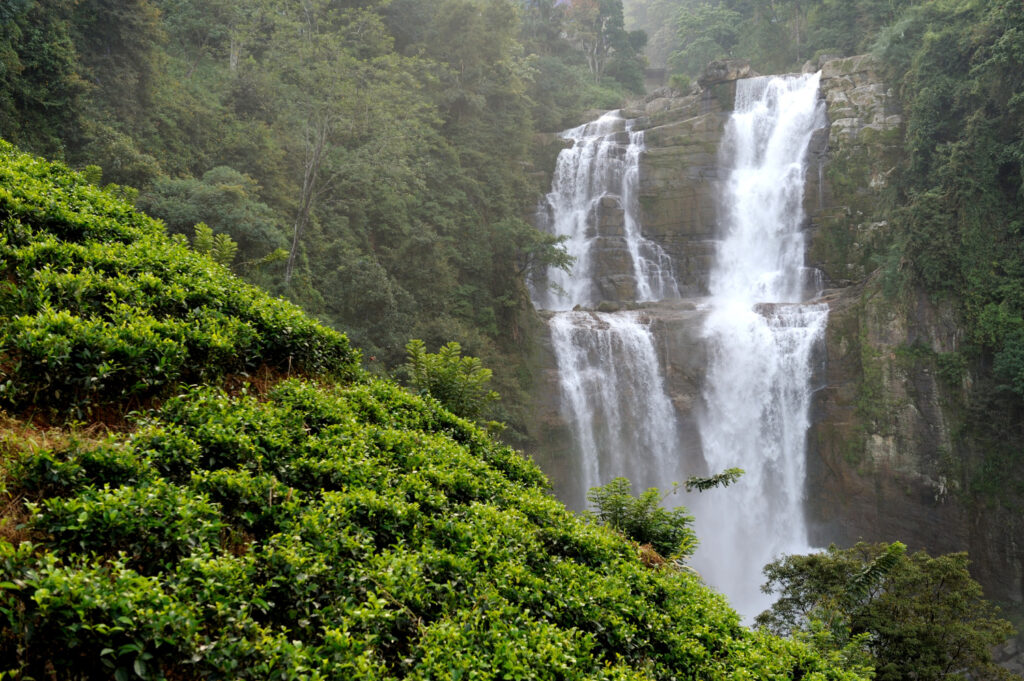
There are landscapes that quietly sustain life without demanding attention. They regulate rainfall, store water, cool temperatures, protect biodiversity, nourish soil, and support communities across generations. The Western Ghats are one of those landscapes.
Stretching for nearly 1,600 kilometers along India’s western coastline, the Western Ghats are older than the Himalayas and recognized globally as one of the world’s eight “hottest hotspots” of biodiversity. But their importance goes far beyond forests or wildlife tourism.
These mountains influence:
- India’s monsoon systems
- River networks
- Groundwater recharge
- Carbon storage
- Agriculture
- Coastal ecosystems
- Long-term climate stability.
For the Konkan region, the Western Ghats are not simply nearby mountains. They are the ecological backbone of the entire landscape. The rivers, forests, mangroves, farms, estuaries, and even the famous monsoon identity of Konkan exist because of the ecological relationship between the mountains and the coast. Today, however, that relationship is under increasing pressure from climate change, deforestation, land-use change, and unsustainable development.
The Mountains That Create the Monsoon
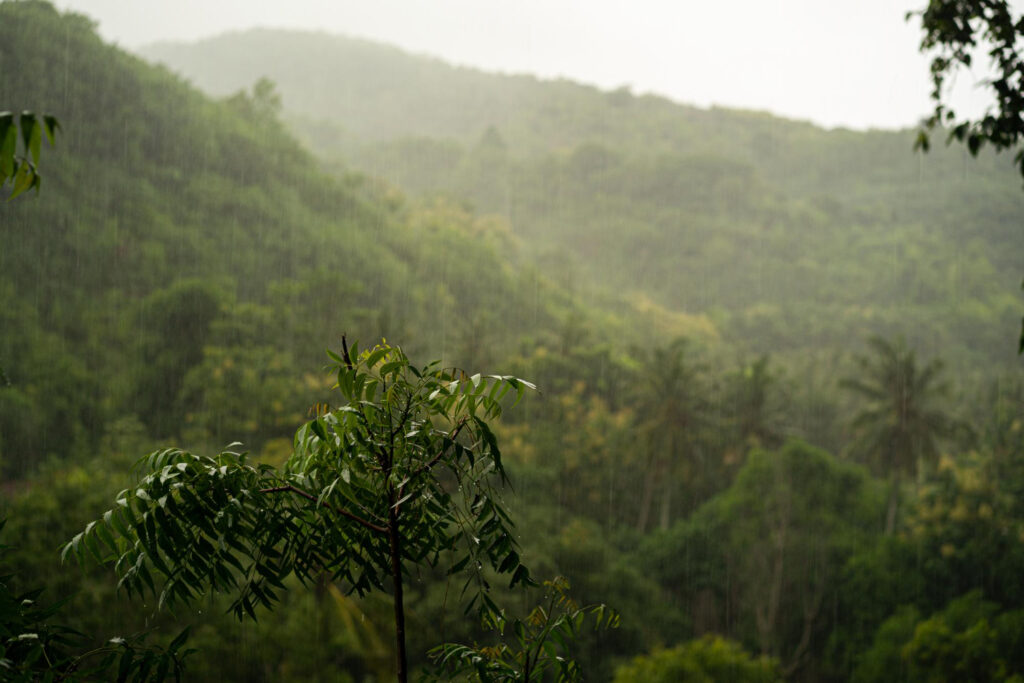
The ecological story of Konkan begins with rain and the Western Ghats are what make that rain possible. Every year during the southwest monsoon, moisture-rich winds travel from the Arabian Sea toward India’s western coast. When these winds hit the steep wall of the Western Ghats, they are forced upward into cooler layers of the atmosphere.
As the air rises and cools, water vapor condenses, clouds form, and intense rainfall is released over the western coastline. This phenomenon, known as orographic rainfall, is why Konkan receives some of the heaviest rainfall in India. In many parts of Ratnagiri and Sindhudurg, annual rainfall crosses 3,000 mm.
This rain supports:
- Rice cultivation
- Mango orchards
- Groundwater recharge
- River systems
- Forests
- Wetlands
- Fisheries
- Coastal biodiversity
Without the Western Ghats acting as a climatic barrier, much of this rainfall would pass inland, dramatically changing the ecological identity of the region.
Why This Matters Ecologically:
Monsoon systems are not only about rainfall quantity. They depend heavily on: Timing, Intensity, Distribution, and Consistency.
Healthy forests in the Western Ghats help stabilize these systems by:
- Maintaining atmospheric moisture
- Cooling land temperatures
- Regulating evapotranspiration
- Supporting cloud formation.
Scientists increasingly warn that large-scale deforestation and warming temperatures may destabilize these natural climatic cycles. Recent studies show parts of the Western Ghats have already recorded warming trends approaching 1°C over recent decades. Even seemingly small temperature increases can significantly affect ecosystems because rainfall systems are highly sensitive to atmospheric changes.
Rising temperatures are linked to:
- Erratic rainfall
- Longer dry spells
- Intense cloudburst events
- Declining ecological resilience.
Climate change impacts in the Western Ghats – Springer Research
The Western Ghats Are a Biodiversity Hotspot

The Western Ghats are considered one of the richest biodiversity regions in the world because they contain extraordinary levels of endemic species, and life forms found nowhere else on Earth. This biodiversity evolved over millions of years because the region contains highly varied ecosystems:
- Tropical evergreen forests
- Semi-evergreen forests
- Shola forests
- Grasslands
- Lateritic plateaus
- River ecosystems
- Wetlands
- Mangroves
- Estuarine habitats.
Scientists estimate the Western Ghats contain:
- More than 5,000 species of flowering plants
- Over 500 bird species
- Around 290 freshwater fish species
- Hundreds of amphibians and reptiles.
Many of these species are endemic, meaning they exist nowhere else globally.
UNESCO – Western Ghats World Heritage Site
Why Endemic Species Matter
Endemic ecosystems are highly specialized. Over centuries, plants, insects, amphibians, birds, fungi, and animals evolved together in response to:
- Heavy monsoon rainfall
- Specific soil chemistry
- Humidity
- Forest density
- Seasonal climate patterns
This creates extremely delicate ecological interdependence.
For example: certain frogs breed only during precise monsoon conditions, some plants depend on very specific pollinators, and forest insects support entire food chains.
When ecosystems are disrupted through deforestation or climate change, these interconnected relationships begin collapsing. Because endemic species cannot easily relocate or adapt quickly, biodiversity loss in hotspots like the Western Ghats can become irreversible. Interestingly, scientists continue discovering new species in the Ghats even today, proving how ecologically rich and still underexplored the region remains.
New butterfly species discovered in Kerala’s Western Ghats – Times of India
Western Ghats Forests Are More Than Trees: They Are Climate Infrastructure
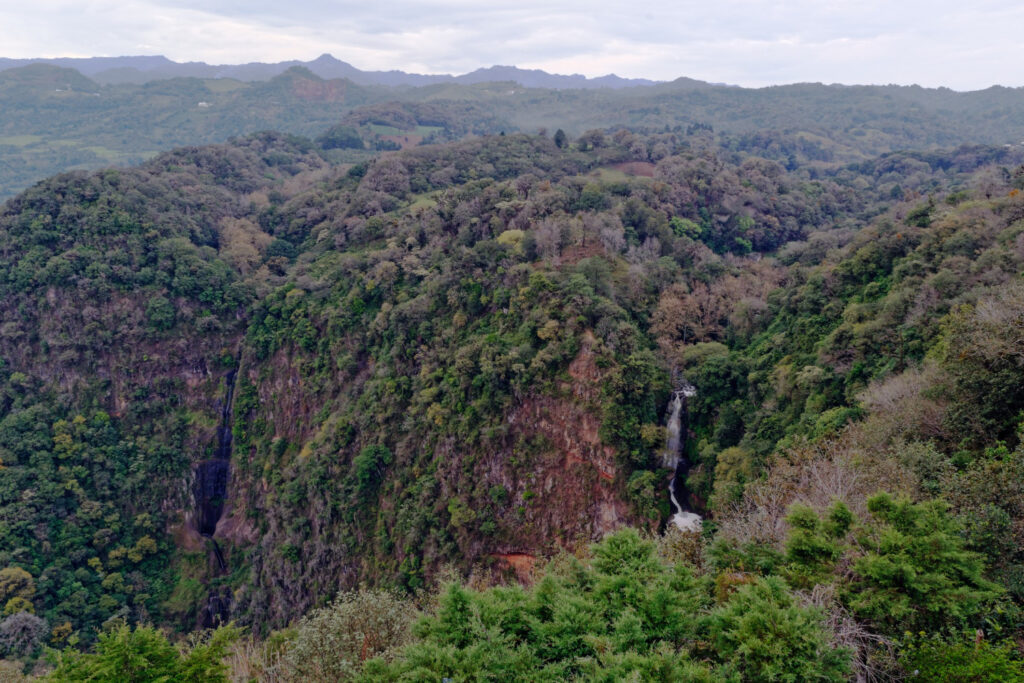
Forests are often discussed emotionally as green spaces or scenic landscapes but ecologically they function as critical climate infrastructure.
The forests of the Western Ghats perform several invisible but essential functions:
- Storing carbon
- Cooling temperatures
- Regulating rainfall
- Stabilizing soil
- Maintaining groundwater
- Protecting biodiversity
Carbon Storage and Climate Regulation
Trees absorb carbon dioxide from the atmosphere through photosynthesis and store it in: Trunks, Roots, Leaves, Vegetation, and Forest soils. This process helps slow climate change by reducing atmospheric carbon concentrations. The dense evergreen forests of the Western Ghats are among India’s most important natural carbon sinks. Recent studies on agroforestry and forest ecosystems in the Ghats recorded extremely high ecosystem carbon stocks, especially in mixed native tree systems.
Carbon storage in Western Ghats agroforestry systems – CATENA Journal
Forest Cooling Effect
Forests also regulate local temperatures through:
- Shade
- Evapotranspiration
- Moisture release into the atmosphere.
When forests disappear:
- Land surfaces heat faster
- Humidity patterns change
- Local climate becomes harsher
This contributes to:
- Heatwaves
- Drying rivers
- Reduced moisture stability
Soil Protection
Tree roots stabilize slopes and hold soil together during heavy rainfall. In high-rainfall regions like Konkan, this is extremely important because intense monsoons can rapidly erode exposed land.
Healthy forests reduce:
- Landslide risk
- Sedimentation
- River flooding
- Soil degradation.
Without forests, landscapes lose their natural buffering capacity.
The Western Ghats Are One of India’s Most Important Water Systems
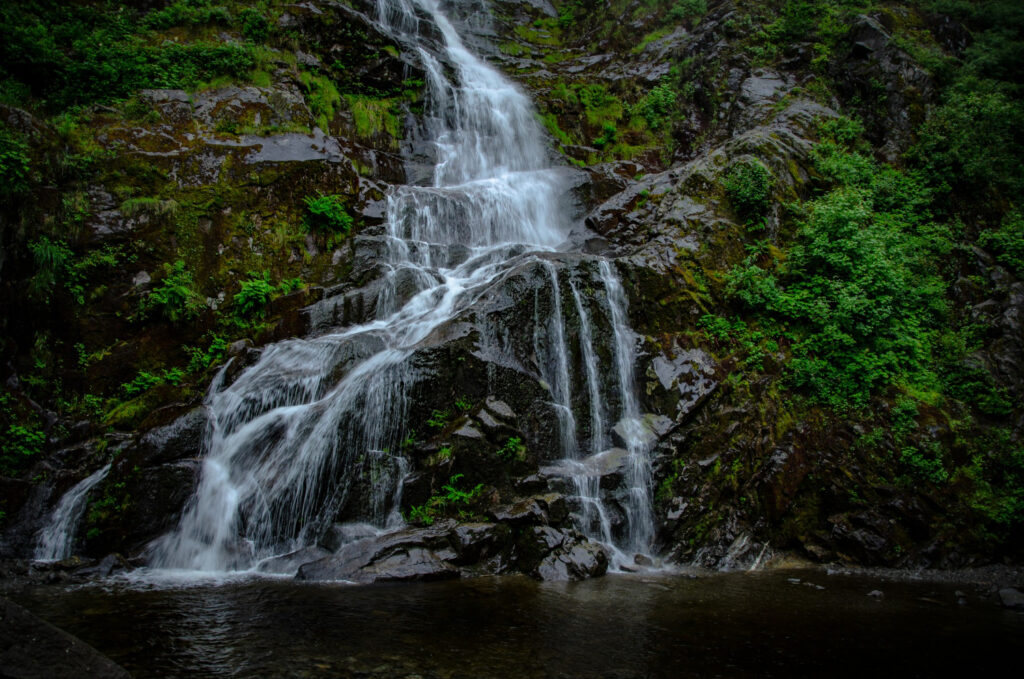
The Western Ghats are often described as the “water tower” of peninsular India. This is because the mountain system plays a central role in capturing, storing, and distributing freshwater across large parts of the country.
How Forests Regulate Water
Forests function like giant natural sponges.
During the monsoon:
- Soil absorbs rainfall
- Tree roots slow runoff
- Groundwater recharge increases
- Water is gradually released into streams and rivers.
This stabilizes river flow throughout the year.
Without forest cover:
- Rainwater flows rapidly downhill
- Floods intensify
- Groundwater recharge weakens
- Rivers become seasonal.
This explains why regions experiencing deforestation often face both:
- Severe flooding during monsoons
- Water scarcity during summers.
Importance for Konkan
Konkan’s rivers, estuaries, agriculture, and fisheries are deeply dependent on stable freshwater systems.
Changes in rainfall timing or water retention affect:
- Rice farming
- Horticulture
- Fish breeding cycles
- Mangroves
- Coastal ecosystems
Ecological imbalance in the Western Ghats therefore directly impacts livelihoods across the Konkan coast. Recent biodiversity and river conservation discussions around the Western Ghats have raised concerns over river modification, extraction pressures, and habitat fragmentation.
Western Ghats biodiversity meet raises river conservation concerns – Times of India
Traditional Konkan Systems Were Ecologically Adaptive
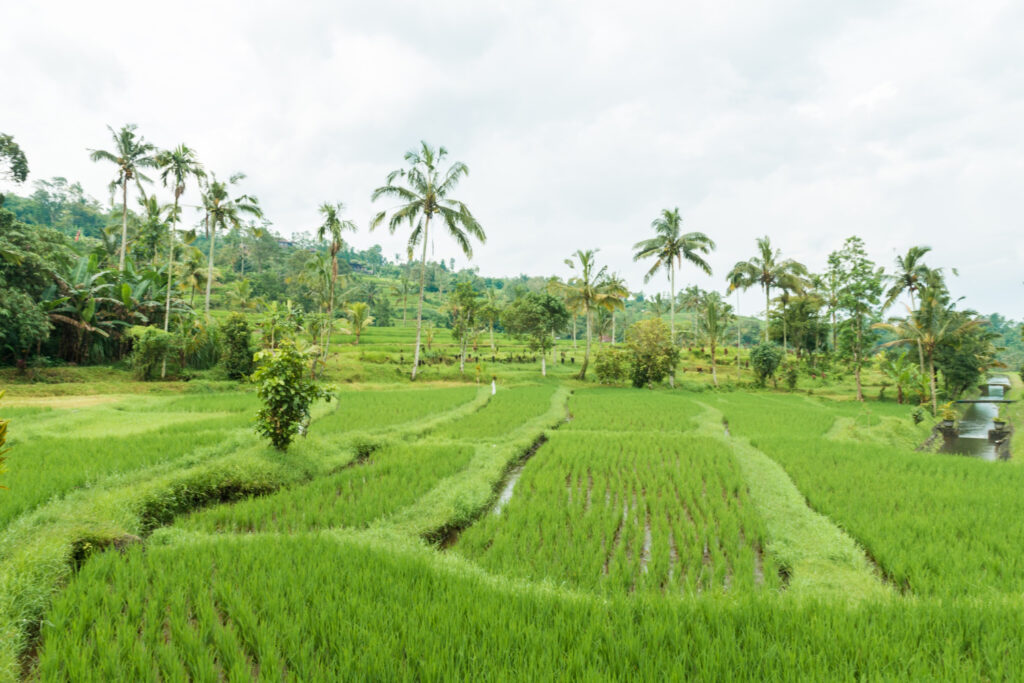
Long before modern sustainability discussions, traditional communities in Konkan had evolved systems deeply aligned with ecological limits. Agriculture was seasonal and biodiversity-based.
Traditional systems often included:
- Mixed cropping
- Coconut and arecanut agroforestry
- Rice-fish cultivation
- Forest-integrated farming
- Local seed diversity
- Rain-dependent agricultural cycles
These systems were naturally climate-adaptive because they evolved through observation of:
- Monsoon behavior
- Soil conditions
- Water availability
- Local biodiversity
Unlike industrial monoculture systems, traditional farming created ecological resilience by diversifying crops and maintaining soil health.
This reduced vulnerability to:
- Pests
- Drought
- Seasonal instability
Many scientists today are revisiting such systems through the lens of regenerative agriculture and ecological restoration.
Recent regenerative agriculture studies in India show improvements in:
- Soil carbon
- Biodiversity
- Water retention
- Climate resilience
Regenerative agriculture and soil health research – Scientific Reports
Ecological Pressure In Western Ghats Is Increasing Rapidly
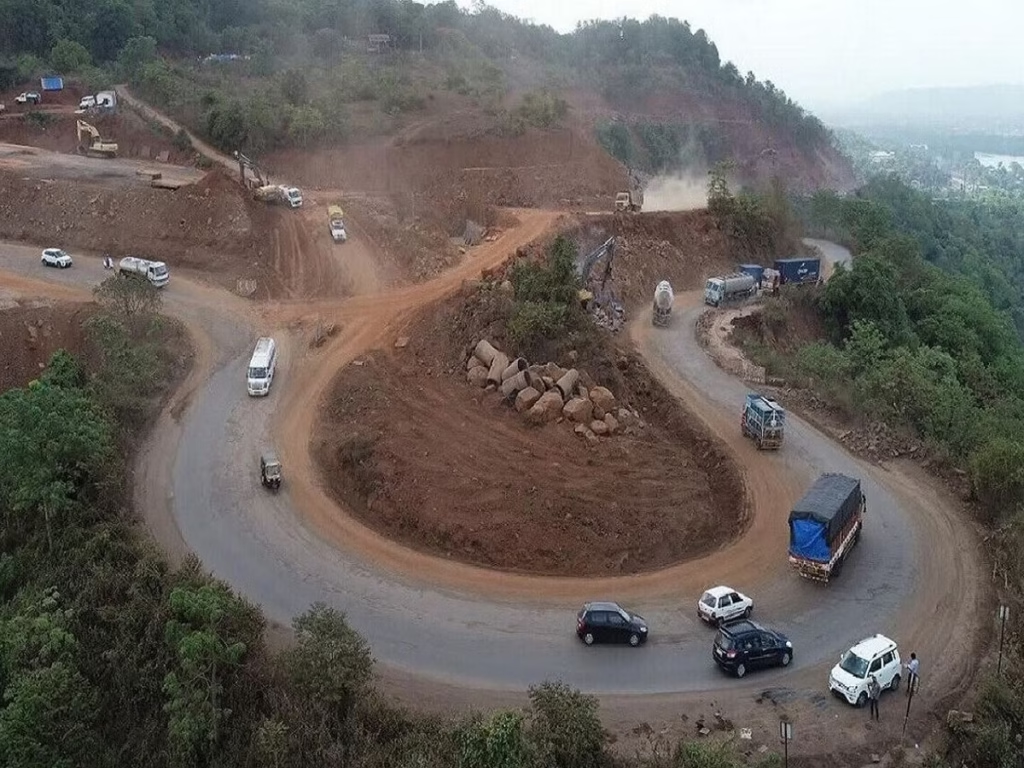
The Western Ghats and Konkan are now experiencing intense development pressure.
This includes:
- Hill cutting
- Mining
- Quarrying
- Highway construction
- Tourism infrastructure
- Urban expansion
- Deforestation
Fragile landscapes are being altered faster than ecosystems can recover.
Why Hill Cutting Is Dangerous
The steep slopes of the Western Ghats evolved naturally over geological timescales.
When hills are cut for roads or construction:
- Natural drainage systems change
- Slopes become unstable
- Runoff intensifies
- And landslide risk increases
This is especially dangerous in high-rainfall regions where intense monsoon rains already exert enormous pressure on the terrain.
River and Wetland Degradation
River modification, sand mining, and mangrove destruction further weaken ecological resilience.
Mangroves are especially important because they:
- Protect coastlines from erosion
- Absorb storm surges
- Support fish breeding
- And store carbon
Destroying these systems weakens the entire coastal ecology of Konkan.
Recent ecological assessments have documented vegetation shifts in parts of the Western Ghats where evergreen forests are gradually being replaced by drought-tolerant thorny vegetation due to climate stress.
Climate-driven vegetation shifts in the Western Ghats – Times of India
Soil Is the Invisible Foundation of Ecological Stability

Beneath forests, farms, and grasslands lies soil, one of the most important and least understood ecological systems.
Healthy soil is alive with: Microorganisms, Fungi, Insects, Organic carbon, and nutrient cycles.
In Konkan’s high-rainfall environment, healthy soil performs critical functions:
- Absorbing rainwater
- Preventing erosion
- Stabilizing slopes
- Supporting biodiversity
- And maintaining agricultural fertility.
Why Soil Organic Carbon Matters
Soil organic carbon improves:
- Water retention
- Microbial activity
- Nutrient cycling
- And climate resilience
When forests are removed or land is excessively disturbed:
- Soil loses organic matter
- Erosion accelerates
- Fertility declines
- And landscapes become ecologically unstable.
This is why ecological degradation often begins silently underground before becoming visible through floods, droughts, or declining productivity.
The Future of Western Ghats and Konkan Depends on Ecological Intelligence
The ecological systems of the Western Ghats developed over millions of years. They cannot be replaced quickly once damaged. The challenge facing Konkan today is not whether development should happen. The real challenge is whether development can happen without dismantling the ecological systems that make life possible.
Because the Western Ghats are not just forests.
They are:
- Climate regulators
- Water systems
- Biodiversity reservoirs
- Carbon sinks
- And the ecological foundation of western India
Konkan still retains fragments of ecological wisdom:
- Monsoon-adapted agriculture
- Biodiversity-rich landscapes
- Forest-linked livelihoods
- And seasonal ecological rhythms
Protecting these systems is no longer only about conservation. It is about ensuring long-term ecological survival in a rapidly changing climate.
Conclusion
The Western Ghats are more than forests or mountains, they are the ecological heartbeat of Konkan. As climate change and rapid development reshape the region, protecting these ecosystems is no longer optional, but essential for water, soil, biodiversity, and future generations. Konkan still carries the wisdom of living in balance with nature. The question is whether we choose to preserve that balance before it is lost.