What is Mangrove Coastal Protection?
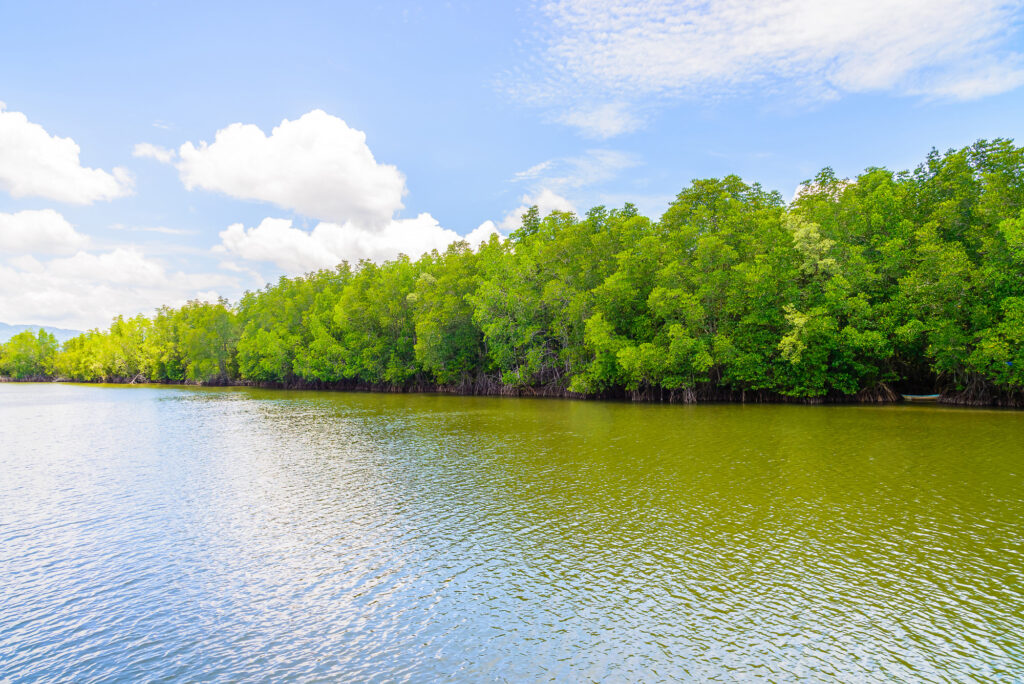
Last year, I stood on a farm where the red laterite soil meets the salty water of the creek. I was walking the edge of our farm last week. The tide was coming in high. It was one of those pre-monsoon swells that make the water look angry. I looked at the mangroves standing in the salt. I realised they are the only reason my Alphonso trees are still standing. In the Konkan, these trees are our quiet partners. We call it Mangrove Coastal Protection, but to me, it’s just survival. Right now, we are in a fight. Big lobbies want to call our wetlands “wasteland” so they can build resorts. But if those trees go, our organic farms go with them.
Industrial lobbies often see these wetlands as “wasteland” ready for concrete resorts. If we want to keep our organic farms thriving, we must learn about these trees and fight against the policies that threaten them.
Why Mangroves Are Nature’s Coastal Shield
How These Trees Stop the Ocean
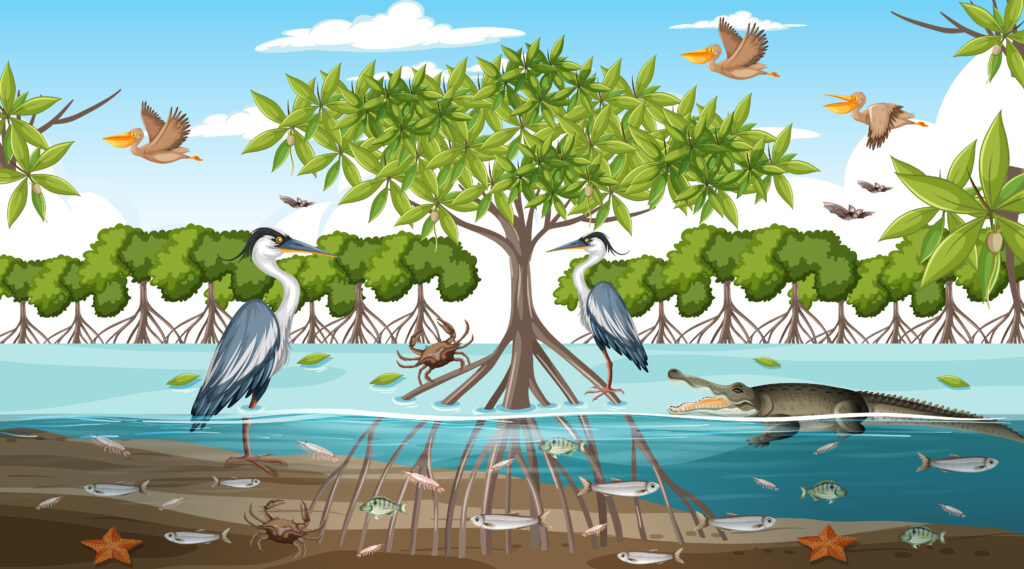
Mangrove coastal protection is highly effective, absorbing up to 35% of energy from wind-generated waves. A 2024 report from the National Centre for Sustainable Coastal Management states that a 100-meter-wide mangrove belt can cut wave height by 30%-60%. The root systems of mangroves, like Rhizophora mucronata (Red Mangrove), act like a giant, flexible sponge. Unlike concrete sea walls, which can crack and lead to erosion in nearby areas, mangroves become stronger over time by trapping sediment.
I have seen this in action. During strong winds, our Alphonso mango trees stay safe because the mangroves block the wind and catch heavy salt spray. Without this natural barrier, the salt could damage the leaves and ruin our organic harvest.
Saving Our Precious Red Soil
Mangrove coastal protection plays a crucial role in preventing land loss by trapping silt and creating new soil. Our red laterite soil is rich in nutrients but can easily wash away during the heavy rains of the Kokan monsoon season. The breathing roots of Avicennia marina(Grey Mangrove) act like thousands of tiny anchors, stabilising the soil. Recent studies from 2025 show that mature mangroves can reduce sediment erosion by 50–90% compared to unvegetated areas. This significantly helps retain the organic matter and Jivamrut we add to our soil, keeping it in our fields where it belongs.
The Strategic Rationale for Mangrove Coastal Protection
This table explains why mangroves are not just trees, but vital infrastructure for an organic farm.
| Benefit Category | Key Data Points | Impact on Kokan Organic Farming |
| Risk Mitigation | Absorbs 35% of wave energy; Reduces flood depth by 20%. | Prevents “salt-burn” on Alphonso mango and coconut crops during cyclones. |
| Soil Security | Reduces coastal sediment erosion. | Keeps nutrient-rich red laterite soil and Jivamrut runoff on the farm. |
| Blue Carbon | Stores 4x more carbon per hectare than tropical land forests | Creates a cooler microclimate, vital for temperature-sensitive organic produce. |
| Groundwater Safety | Acts as a biological barrier against saline intrusion. | Prevents well water from turning salty, ensuring fresh irrigation for crops. |
| Livelihood Value | Mangrove fisheries generate ₹6,800 Cr annually in India. | Provides local fish meal, a high-quality natural nitrogen source for organic soil. |
Ecological & Climate Benefits of Mangroves
The Power of Blue Carbon
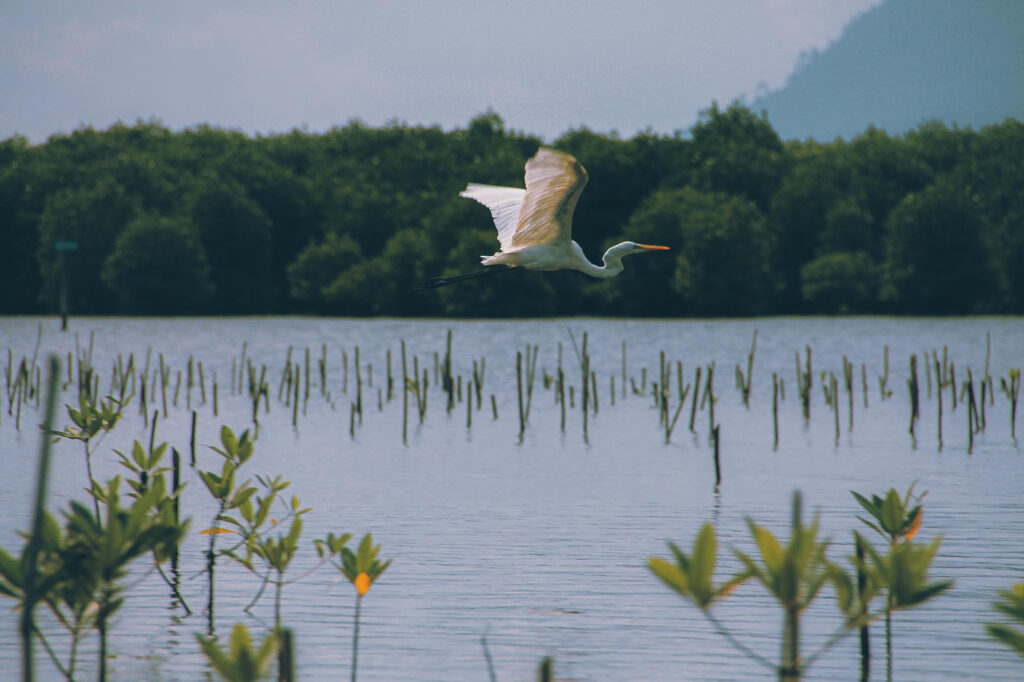
Mangroves are a “Blue Carbon” powerhouse, storing up to four times more carbon per hectare than terrestrial tropical forests. While a typical rainforest stores carbon in its wood, mangroves lock 60–80% of their carbon away for centuries in the oxygen-free (anoxic) mud beneath them. The UNESCO Blue Carbon Initiative highlights that this carbon stays trapped for millennia if left undisturbed. In 2026, protecting these sinks is our best tool to keep our local Konkan microclimate cool and stable.
A “Fish Factory” for the Farm
One-third of India’s marine fish catch breeds in mangrove creeks. Nearly 4 million Indians depend on mangrove-based fisheries. The space between the roots is a perfect hiding spot for juvenile prawns and mud crabs. When the mangroves are healthy, the local fishing industry thrives. This creates a cycle of fertility for us; we use local fish meal as a natural nitrogen source. The health of the sea directly feeds the health of our organic soil.
Threats to Mangrove Coastal Protection
How Lobbies Exploit the Coastline
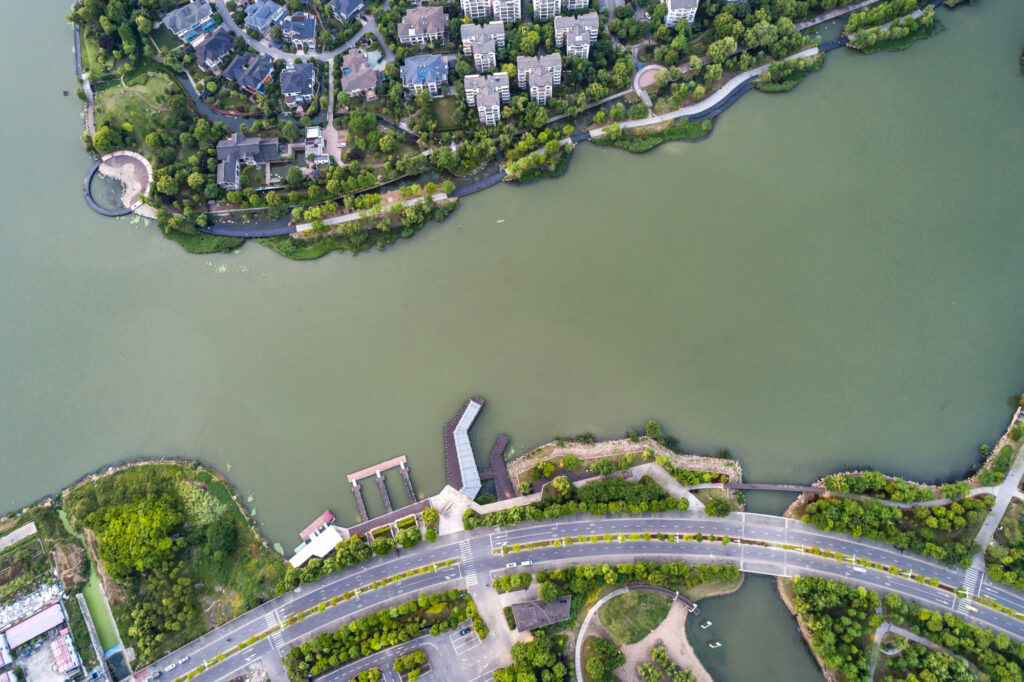
Industrial lobbies exploit the coast by pushing for relaxed Coastal Regulation Zone (CRZ) rules. Recently, we have seen a lot of “greenwashing.” Companies destroy 50-year-old forests and promise to plant tiny saplings elsewhere to claim carbon credits. This is a scam. You cannot replace a mature ecosystem with a few seedlings and expect the same level of protection.
Builders also use “silent destruction.” They dump construction waste into creeks at night. This chokes the breathing roots and kills the trees. Once the trees are dead, they claim the land is “barren” to get building permits.
Standing Up for Our Land
Lobbies rely on our silence. If you see trucks dumping rubble, take a photo. Under the 2018 Maharashtra High Court judgment, all mangroves on government land are protected forests. As of January 2026, the court has ordered stricter protection and the transfer of more mangrove land to the Maharashtra Mangrove Cell.
The Evolution of Mangrove Coastal Protection Policies
The legal milestones and how we can use these laws to fight industrial lobbies.
| Milestone (Year) | Legal Instrument / Policy | Salient Feature for Farmer Defense |
| 1991 / 2011 / 2019 | CRZ Notifications | Declares mangroves as CRZ-I (Eco-sensitive); zero-development zones. |
| 2018 | Maharashtra HC Judgment | Declares all mangrove destruction a criminal offense regardless of land ownership. |
| 2023 | MISHTI Scheme | Aims to restore 540 km²; mandates community-led restoration over industrial expansion. |
| 2025 | Blue Carbon Registry | Allows villages to earn income from carbon storage rather than selling land to developers. |
| 2026 (Current) | Digital Mangrove Audit | Mandatory GIS-mapping of all coastal belts to prevent “silent” debris dumping. |
Successful Mangrove Protection & Restoration Examples
The Van (Sanrakshan Evam Samvardhan) Adhiniyam, 1980, is our strongest weapon. It states that mangroves are protected regardless of who owns the land. Furthermore, the 2023 MISHTI (Mangrove Initiative for Shoreline Habitats & Tangible Incomes) program has funnelled new resources into restoration. If a project in your village claims to be “restoration” but looks like development, demand to see their MISHTI compliance.
If a builder tries to clear a patch, ask for the CRZ-I clearance papers. You can check the official Ministry of Environment (MoEFCC) website for the latest notifications.
Pro-Tip from the Field
Map your High Tide Line. Use your phone to take timestamped photos of where the water reaches during the monsoon. Lobbies often change maps to show that land is “safe” for building. Your photos are legal evidence that can protect your village from a land grab.
Case Atlas – Success in Mangrove Coastal Protection
These real-world examples prove that community action works against industrial encroachment.
| Region | The Intervention | Outcome | The “Counter-Lobby” Factor |
| Thane Creek, Mumbai | Corporate-funded trash booms & nursery collectives. | 150 tonnes of plastic removed; 3.7 lakh saplings planted. | Women-led groups used CSR funds to block industrial debris dumping. |
| Pattuvanachi, TN | Community-led canal desiltation & seed planting. | The mangrove area doubled to 9,039 hectares. | “Village Mangrove Councils” gained legal authority over coastal land use. |
| Ratnagiri Coast | GIS-driven site selection & local patrolling. | Women-led groups used CSR funds to block the dumping of industrial debris. | Farmers used timestamped photos to invoke the 1980 Forest Act. |
| Andaman Islands | Eco-tourism & community patrolling. | Poaching reduced 60%; household income up 22%. | Secure land tenure under the Forest Rights Act (FRA) empowered local tribes. |
Conclusion: Protecting Coasts for the Future
Mangrove Coastal Protection is the only thing keeping the Kokan safe from both nature and greed. These trees protect our soil, our water, and our organic future. We must treat these coastal guardians with the same care we give our prized mango trees. When the mangroves are safe, our way of life is safe.